
Why Consistency Audits Are Key to Maximizing Cobot Welding Quality
As cobot welding continues to expand across modern manufacturing, maintaining consistent weld quality has become one of the most important measures of long-term success. Even the most advanced cobot welding systems can experience gradual performance drift due to torch wear, material variation, or slight calibration changes between shifts.
Small inconsistencies (barely noticeable in a single run) can multiply into costly rework, scrap, or warranty issues over time. That’s why leading manufacturers have begun performing regular consistency audits: structured evaluations designed to ensure every weld meets the same standard of quality, day after day.
In today's note, we'll share everything you need to know and should expect from a weld consistency audit. These audits go beyond maintenance. They align people, equipment, and process parameters to prevent defects before they appear.
The Role of Consistency in the Manual Welding and Cobot Welding Process
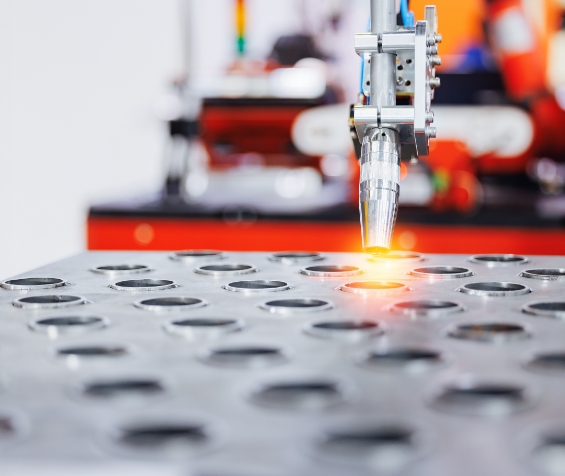
Consistency is the true benchmark of performance in automated welding. Without it, the advantages of speed and precision fade quickly.
Consistency Defines Quality
In automated welding, repeatability equals reliability. Every bead must meet design intent and mechanical strength standards without deviation, regardless of operator, shift, or production batch. When a cobot welder produces the same outcome thousands of times, confidence in the process and the product rises dramatically.
How Variation Creeps In
Even subtle changes in torch angle, wire feed rate, or joint condition can alter penetration and bead shape. Environmental factors like humidity or inconsistent materials compound the issue, especially in high-mix low-volume environments where part geometries and welding paths change frequently.
The Cost of Inconsistent Welds
Consistency is cost-effective. Think about it: when variation isn’t addressed, it leads to rework, wasted consumables, and missed delivery deadlines. In industries where uptime defines profitability, inconsistent welds undermine the very purpose of cobot welding solutions: to deliver higher throughput, stronger performance, and predictable outcomes.
Consistency isn’t automatic; it’s engineered and maintained through continuous evaluation and control. A well-defined audit process is how manufacturers transform automation from a reactive tool into a proactive system of quality assurance.
What a Cobot Welding Consistency Audit Includes
A consistency audit is a proactive review of both the cobot’s performance and the process parameters that define weld quality. It verifies that every element from the robotic arm to the welding power source is properly aligned for optimal results.
Beyond Visual Inspection: The True Value of a Weld Consistency Audit
- Program Verification: Confirms that the latest welding program and part tolerances match production requirements, ensuring that operators are running the correct revision for each job.
- Tool and Torch Inspection: Checks for torch wear, spatter buildup, and misalignment that can affect penetration or bead uniformity. Consumables are reviewed and replaced as needed.
- Sensor and Calibration Checks: Verifies seam-tracking, vision guidance, and torque sensors for accuracy, preventing errors in path following or adaptive movement.
- Material and Fixture Review: Ensures materials are clean, properly clamped, and within tolerance before welding begins, crucial for maintaining consistent fit-up and geometry.
- Data and Log Analysis: Reviews system logs for irregularities in current, voltage, or welding efficiency, using trends to spot early signs of process drift.
- Operator Review: Confirms that personnel understand setup procedures, follow best practices, and record changes to maintain traceability.
Performing this review on a scheduled basis (daily, weekly, or per batch) identifies small issues before they escalate into defects or downtime. Audits protect uptime, improve quality assurance, and preserve the reputation of every welded product leaving the facility
How Regular Audits Improve Overall Welding Quality in Robotic Welding Systems
If you're looking to improve safety procedures, reduce human error, and achieve high-accuracy welds and increased productivity, then consistency audits are more than a formality. Audit isn't an exciting word, but the reality is that these audits are the backbone of maintaining excellence in modern robotic welding systems.
By combining real-world data with engineering oversight, audits ensure that cobot-driven welding operations meet the same quality standards across every product run, shift, and operator.
Audits are a Necessity for High-Quality Welds
Preventing Performance Drift in Robotic Welding Cells
Over time, even a perfectly tuned welding robot can experience small shifts in calibration due to torch wear, fixture changes, or environmental factors. Regular audits keep robotic welding cells aligned with their original welding procedure specifications, ensuring that each weld joint is executed to the same depth, width, and integrity as the first production cycle.
Improving Weld Consistency and Strength in Collaborative Robots
Data collected through audits helps engineers fine-tune welding parameters, from travel speed and amperage to weld pool control and torch angle. The result is stronger, more consistent welds with fewer defects. Whether it’s spot welding, laser welding, or hybrid applications, maintaining accurate parameters leads to higher performance and extended equipment life.
Enhancing Traceability, Quality Control, and Compliance
In sectors like automotive manufacturing, metal fabrication, and aerospace, documentation is everything. Regular audits produce records that complement non-destructive testing methods such as ultrasonic testing, penetrant testing, and magnetic particle testing, as well as post-process visual inspection. These measures reinforce compliance with internal and external quality control requirements.
Reducing Downtime and Costs
Identifying issues early, before they trigger scrap or rework, directly helps improve efficiency. By catching anomalies in manufacturing process data, audits minimize unplanned maintenance and extend the uptime of both the robot arm and auxiliary systems.
Auditing transforms robotic welding from a reactive process into a predictive one. The result: consistent quality, lower operational costs, and systems that get smarter with every production cycle.
Integrating Consistency Audits Into Daily Operations
A successful audit program isn’t an occasional check; it’s a continuous improvement loop woven into every layer of production. What quality audits look like in your operation:
- Establish Baseline Metrics: Define measurable indicators such as heat input, wire feed speed, and bead geometry. These serve as benchmarks for detecting deviation across ongoing welding operations.
- Schedule Regular Reviews: Perform quick visual verifications each shift and more detailed evaluations weekly or monthly to maintain alignment with engineering standards.
- Leverage Automation Data: Use analytics from collaborative robots and control software to detect trends early and plan predictive maintenance.
- Train and Empower Operators: Equip technicians and human welders with the knowledge and authority to perform first-level checks, reinforcing ownership of the process.
- Document and Adjust: Record every observation, adjustment, and parameter change to strengthen process control, ensure adherence to safety measures, and maintain long-term stability.
When audits become part of the natural rhythm of manufacturing operations, they elevate both product and process. The outcome is a culture of precision, safety, and continuous improvement.
Melton Machine & Control Company Excels in Welding Procedure Specifications and Quality Assurance
For over 55 years, Melton Machine & Control Company has been at the forefront of welding automation and precision integration. Our team combines decades of hands-on experience in designing, commissioning, and maintaining cobot welding solutions with advanced process validation tools.
From welding process design to real-time data monitoring, Melton’s systems ensure every weld achieves lasting consistency. Each solution is tailored to meet your production goals and provide quality welds consistently.
Our philosophy remains simple: “A solution that works for you because it was made for you.” Every project we deliver emphasizes scalability, reliability, and the partnership needed to sustain long-term performance, no matter how complex your operation becomes. With Melton, you gain a cobot welding solution built to perform today, adapt tomorrow, and support consistent, high-quality production for the life of your operation.
Contact our team to start designing a solution engineered around your exact production needs.
Start a Conversation with the Melton Today
Consistency is the foundation of welding quality, and cobots are only as good as the systems that monitor and maintain them. Treating audits as a strategic investment, not a maintenance chore, ensures lasting productivity and a higher return on every automation asset.
Start a conversation with us to strengthen your cobot welding quality program and build a future defined by precision, reliability, and consistent excellence.