

What Is Robotic Welding? A Practical Guide for Manufacturers
Manufacturers evaluating automation often begin with a straightforward question: What is robotic welding, and how exactly does it differ from traditional welding methods? While the concept may sound complex, the fundamentals are practical.
Robotic welding combines industrial robotics, precision motion control, and programmed weld parameters to deliver consistent, repeatable welds at scale. For many operations, the decision to explore automation is driven by labor shortages, rising quality expectations, and pressure to increase throughput without expanding headcount.
Today, we're breaking down how robotic welding works, where it delivers measurable value, and what manufacturers should consider before implementing a system.
What Is Robotic Welding?
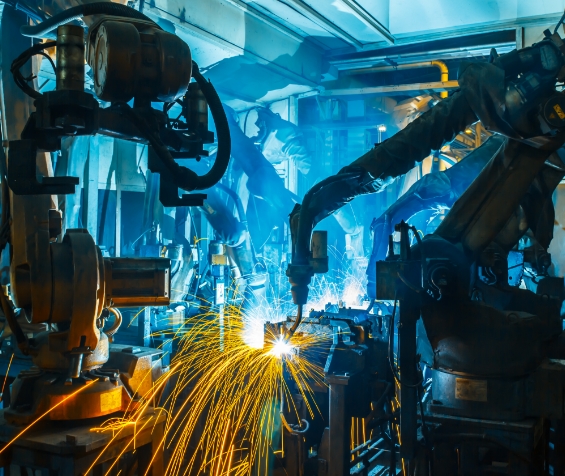
Robotic welding is an automated welding process. As the name implies, a programmable industrial robot performs welding tasks according to predefined parameters. Unlike manual welding, where technique and consistency vary by operator and fatigue level, robotic systems execute the same welding jobs with identical speed, positioning, and heat input each cycle.
The goal is not to eliminate skilled human welders. Instead, robotic welding extends their capabilities by automating repetitive weld paths while maintaining strict control over quality and production output.
Core Components of a Robotic Welding System
A robotic welding cell is not defined by a single welding robot. It's a coordinated system of mechanical, electrical, and software-driven elements engineered to operate as one controlled process. In the modern welding industry, manufacturers rely on robotic technology to automate repetitive welding tasks while maintaining the parameters required to produce high-quality welds across demanding applications.
These robotic welders are configured to execute precise welding procedures under tightly managed conditions, and they consist of multiple integrated elements working together. Key components include:
- Industrial robot arm: A multi-axis robotic arm that manipulates the welding torch with precise motion control and repeatability.
- Welding power source: The equipment that delivers current and voltage according to the specified welding process, whether MIG, TIG, or other arc methods.
- End-of-arm tooling and torch package: The welding torch, wire feeder, and related accessories mounted to the robot for accurate weld delivery.
- Positioners and fixtures: Devices that hold and orient parts to ensure consistent joint alignment and repeatable weld placement.
- Control system and programming interface: Software and hardware that define weld paths, travel speed, torch angle, and sequencing.
- Safety systems: Guarding, sensors, and interlocks designed to protect operators while maintaining productivity.
When these elements are properly engineered and integrated, the result is a repeatable, high-performance welding process.
How Robotic Welding Works in Practice
Understanding how robotic welding operates inside a real production environment is essential for evaluating its practical value. While the concept may seem straightforward (a robot performing a weld), the reality involves coordinated motion control, parameter management, fixturing precision, and process validation.
How Does Robotic Arc Welding, Plasma Welding, Resistance Welding, and MIG Welding Work?
The process of robotic welding can be broken down into its more individualized functions, including:
Programming and Path Definition
Weld paths are programmed either through teach pendants or offline simulation software. Engineers define travel speed, weld sequence, arc start and stop points, and torch orientation. Once validated, the robot executes these parameters consistently across every production cycle.
For high-volume production, this repeatability becomes a significant advantage. Every weld joint follows the same trajectory and timing, reducing variability between shifts.
Fixturing and Part Positioning
Successful robotic welding depends on stable, repeatable part positioning. Fixtures secure components in precise alignment so the robot can follow programmed paths without deviation.
Variations in fit-up can affect weld penetration and bead geometry. Well-designed fixturing reduces these inconsistencies and supports long-term process stability.
Process Monitoring and Quality Control
Modern systems often incorporate sensors, seam tracking, and data logging to verify performance. Monitoring amperage, voltage, and travel speed provides insight into weld integrity and early detection of drift.
In advanced applications, robotic welding integrates with Robotic Quality Control systems to inspect welds automatically, improving traceability and compliance with internal or industry standards.
Robotic Welding: Types of Applications
Robotic welding is adaptable to a range of manufacturing environments. Some cells focus on MIG welding for structural components, while others support TIG welding for thinner materials. Additional configurations may incorporate plasma welding, resistance welding, or other variations of the arc welding process, depending on material thickness, joint design, and throughput requirements.
Regardless of the arc welding method selected, achieving consistent, high-quality welds depends on how well each piece of welding equipment within the cell is integrated and calibrated. The right approach depends on volume, part variability, and quality requirements.
The top four five robotic welding applications are:
High-Volume Production Welding
In industries such as automotive and heavy equipment manufacturing, consistent part geometry makes robotic welding especially effective. Systems can operate continuously with minimal variation, supporting high throughput and predictable cycle times.
Flexible and Medium Batch Production
Not all manufacturers operate in large-volume environments. Cobot Solutions, which involve collaborative robots designed to work alongside people, provide flexibility for medium-batch or changing production demands. These systems support adaptability without sacrificing consistency.
Precision and Specialty Applications
Certain applications require high-speed or highly accurate weld placement. In these environments, Robotic Laser Systems may complement or replace traditional arc processes, delivering precision for small components or intricate weld paths.
Integrated Welding Cells
In many facilities, welding is only one part of a broader workflow. Robotic Welding Systems can be integrated with Material Handling Automation to load and unload parts automatically. System Integration ensures these elements function as a unified production cell rather than isolated components.
Low Volume High Mix Weld Cells
Low Volume/High Mix applications can be difficult to setup for large numbers of differing parts. New techniques are available to allow for easier conversion from one style of part to the next. Greater care is needed to define part familiesneeding welding. Melton has had great success in providing robots for Low Volume/High mix, and this may not be practical for every application. An engineering review is needed and Melton can provide a path forward.
Benefits of Robotic Welding for Manufacturers
For manufacturers evaluating automation, the value of robotic welding should be measured in operational terms, not buzzwords. The real advantages appear when systems are engineered around production demands like cycle time, quality standards, labor constraints, and long-term cost control.
If it's implemented strategically and integrated correctly, robotic welding delivers measurable improvements like:
- Improved weld consistency: Automated systems maintain identical weld paths and parameters, reducing variation between operators and shifts.
- Higher throughput: Robots operate continuously without fatigue, increasing output while maintaining quality standards.
- Reduced labor strain: Repetitive or ergonomically challenging welds can be automated, allowing skilled welders to focus on higher-value tasks.
- Enhanced safety: Automation reduces exposure to heat, fumes, and repetitive motion injuries.
- Better data and traceability: Integrated monitoring systems provide records that support quality assurance and compliance requirements.
- Long-term cost control: By reducing scrap, rework, and downtime, robotic welding supports predictable operating expenses over time.
These benefits compound when the system is designed around the specific constraints and goals of the manufacturer.
When Does Robot Welding Make Sense?
Not every operation requires automation. However, certain indicators suggest that robotic welding may deliver a strong return on investment.
Indicators You May Be Ready for Automation
- Persistent labor shortages: Difficulty recruiting or retaining skilled welders can limit growth and delay production.
- High rework rates: Frequent defects may indicate variability that automation can reduce.
- Repetitive weld paths: Parts with consistent geometry are strong candidates for robotic execution.
- Quality documentation requirements: Industries with strict compliance standards benefit from automated data tracking.
- Production bottlenecks: When welding becomes the constraint in a broader workflow, automation can restore balance.
A structured assessment helps determine whether robotic welding aligns with production goals and ROI targets.
Robotic Welding vs. Manual Welding
Automation does not replace craftsmanship. Instead, it complements it. It assigns the most repetitive, parameter-driven welds to robotic systems while preserving manual expertise for complex, variable, or highly customized work.
Where Manual Welding Still Excels
Manual welding remains valuable for prototypes, highly customized parts, and complex assemblies with unpredictable variation. Skilled welders provide adaptability that is difficult to replicate in certain niche applications.
Where Robotics Delivers Measurable Advantage
In repetitive production environments, robotics provides consistency that manual processes cannot sustain indefinitely. Robots execute identical welds regardless of shift length, environmental conditions, or operator variability.
The most effective manufacturing strategies often combine both approaches.
Beyond the Robot: Why System Integration Matters in Any Robotic Welding Process
A robot alone does not guarantee performance improvements. The effectiveness of robotic welding depends on how well it integrates into the broader production environment.
System integration encompasses programming, fixturing design, safety planning, and startup support. Material handling, part presentation, and quality verification must align with welding operations to achieve meaningful gains.
When Robotic Welding Systems are engineered as complete solutions rather than standalone machines, manufacturers see stronger returns, improved uptime, and scalable growth.
Interested in Robotic Laser Welding Right for Your Operation? Melton Machine & Control Company Can Help
So what is robotic welding? It's a strategy that offers manufacturers a practical path to more consistency, productivity, and safety. Whether you're in the automotive industry, automotive manufacturing, medical device manufacturing, or other manufacturing fields, programmable robots are helping teams achieve consistent welding across complex manufacturing processes.
That said, it's not a universal solution. The right approach depends on part geometry, production volume, the types of robotic welding best suited to your metal components, and much more. In environments dominated by repetitive tasks, a robotic welding cell can outperform a manual welder in repeatability and endurance. In other cases, automation may complement skilled labor rather than replace it.
With more than 55 years of experience designing and integrating Robotic Welding Systems, Melton Machine & Control Company understands that a welding robot is only one part of the equation. True performance comes from full system integration.
If you're evaluating robotic welding for your operation, the next step is a structured assessment of your workflow, constraints, and ROI targets. Start a conversation to explore how a tailored automation strategy can support your production goals.
Start a Conversation