

What Manufacturing Tasks Should Be Automated First With Cobots?
Manufacturers exploring automation often ask the same question: What should we automate first?
The answer doesn’t have to be your most expensive process or your slowest workstation. The best first cobot application is typically the process that combines repetitive work, stable production, and measurable business impact.
To understand what to automate with cobots, it helps to first evaluate how work flows through your operation. It’s about more than simply identifying where a robot can be placed on the floor. The most successful automation projects solve production constraints while creating a foundation for future improvements across the facility.
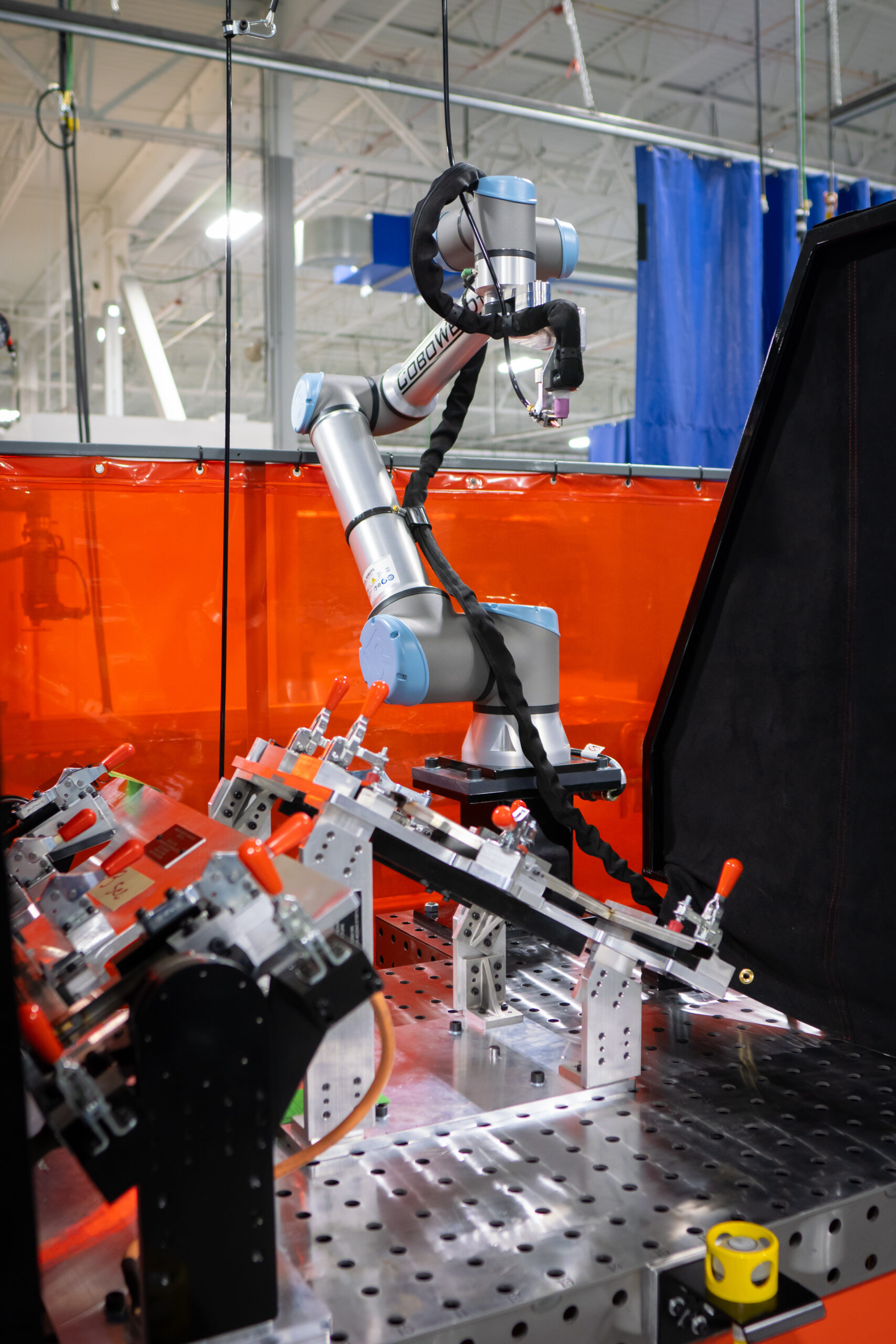
What Processes To Automate With Cobots First
If you're wondering what to automate with cobots, start with processes that are repetitive, predictable, and difficult to staff consistently.
Collaborative robots excel when every production cycle follows the same sequence of movements. Unlike highly customized operations that require constant decision-making, repetitive manufacturing tasks allow cobots to deliver immediate improvements in consistency, throughput, and reliability.
Strong candidates for early automation often share several characteristics:
- The task is repeated hundreds or thousands of times per shift.
- Production follows a consistent sequence with minimal variation.
- Quality depends on maintaining precise positioning or motion.
- The work is physically demanding or ergonomically challenging.
- Labor shortages regularly slow production.
When multiple factors overlap, automation often produces measurable gains much faster than manufacturers expect.
Why Some Collaborative Robotics Projects Succeed Over Others
One of the biggest misconceptions about manufacturing automation is that the most difficult process should be automated first. In reality, experienced automation engineers usually recommend the opposite.
Processes with frequent engineering changes, inconsistent part presentation, or unpredictable workflows introduce unnecessary complexity into a first automation project. Every variable adds engineering time, programming adjustments, and production risk.
Instead, manufacturers often see greater success by automating stable processes where the workflow is already well established. Once those projects demonstrate measurable improvements, expanding automation into more complex operations becomes significantly easier.
Manufacturing Processes That Deliver Strong Results With Cobots
While every facility is different, several manufacturing operations consistently provide excellent opportunities for collaborative automation.
Machine Tending
Machine tending remains one of the most common entry points for collaborative industrial robots because the workflow is naturally repetitive. Loading raw material, unloading finished components, and restarting machine cycles rarely require complex decision-making. Instead, they demand consistency.
Automating these tasks allows CNC machines, presses, and molding equipment to spend more time producing parts instead of waiting for an operator to become available. The result is often increased spindle utilization, improved throughput, and better use of skilled employees throughout the facility.
Welding
Many manufacturers first consider cobots because experienced welders remain difficult to recruit and retain.
Collaborative welding systems are particularly effective when weld paths remain consistent across production runs. Rather than replacing experienced welders, automation allows those employees to focus on programming, setup, inspection, prototypes, and more specialized fabrication while repetitive production welds become automated.
For many manufacturers, this creates a more sustainable workforce strategy while improving weld consistency.
Finishing Operations
Grinding, sanding, polishing, and deburring require operators to repeat the same movements throughout an entire shift while maintaining consistent pressure and surface quality. Those requirements make finishing an excellent automation candidate.
Collaborative robots maintain uniform movement regardless of production volume, reducing variation between parts while minimizing operator fatigue and repetitive motion injuries.
Assembly
Collaborative robots perform well in applications involving repetitive fastening, component placement, adhesive dispensing, and simple assembly sequences where people continue performing inspections or specialized operations nearby.
This balance between human expertise and robotic consistency allows manufacturers to improve productivity without completely redesigning existing production lines.
Packaging, Material Handling, And End-Of-Line Operations
Packaging frequently becomes a production bottleneck because repetitive manual work limits throughput.
Case erecting, product placement, sorting, and packaging tasks often involve lightweight components and predictable movements that align well with collaborative robotics. Automating these operations allows employees to shift toward quality verification, logistics, and production oversight while maintaining consistent packaging performance.
Look Beyond Labor Savings: Additional Benefits of Cobot Automation
Many automation projects begin because manufacturers can't fill open positions. While human workers labor shortages certainly justify automation, they shouldn't be the only factor driving investment.
The strongest manufacturing automation solutions often create value in several areas simultaneously. For example, automating a sanding process may reduce operator fatigue, but it can also improve finish consistency, decrease rework, stabilize downstream painting operations, and shorten production lead times.
Likewise, automating machine tending doesn't simply reduce manual loading. It often increases machine utilization by eliminating the small delays that occur between production cycles. Those few seconds may seem insignificant individually, but multiplied across thousands of cycles each week, they represent hours of additional production capacity.
Every Opportunity to Deploy Cobots Should Start with a Holistic System Approach
Collaborative robot technology is just one component within a much larger manufacturing system. Tooling, fixtures, vision systems, safety features and devices, conveyors, controls, and part presentation all influence whether an automation project succeeds.
That's why experienced system integrators begin by understanding the entire manufacturing process before recommending equipment. Questions such as these often shape the final solution:
- Where does production slow down?
- Which tasks create the most variation?
- Where are operators spending time that doesn't add value?
- How might future production requirements change?
- Can multiple operations be improved through a single automation project?
Answering these questions helps identify opportunities that create lasting operational improvements instead of isolated productivity gains.
Why Custom Cobot Design Delivers Better Long-Term Results
No two production lines operate exactly alike. Part geometry, production volume, floor space, quality requirements, and downstream operations all influence how automation should be designed.
Standardized robotic workstations can solve certain challenges, but many manufacturers benefit from systems engineered specifically for their products and processes.
That's why Melton Machine & Control Company approaches collaborative robots as part of a complete manufacturing solution rather than a standalone piece of equipment. Every project begins with understanding your goals before designing a system that integrates naturally into your production environment.
Whether you're automating welding, finishing, machine tending, assembly, or packaging, the objective remains the same: create automation that supports your business today while providing flexibility for tomorrow.
Ready To Explore Cobot Automation?
Every manufacturing operation presents different automation opportunities. If you’re evaluating where collaborative robots fit into your production process, Melton can help you identify the applications that align with your operational goals. Contact our team today to discuss your manufacturing challenges and get an assessment.
Frequently Asked Questions
What are the best cobot applications for manufacturers?
Machine tending, welding, finishing, assembly, packaging, and material handling are among the most common cobot applications because they involve repetitive, repeatable work that benefits from consistent automation.
How do collaborative robots improve manufacturing?
Collaborative robots improve manufacturing by increasing production consistency, reducing repetitive manual work, improving ergonomics, supporting higher throughput, and allowing skilled employees to focus on more complex responsibilities.
Can cobots work alongside humans?
Yes. Collaborative robots are designed to operate alongside people when properly integrated and evaluated through an appropriate risk assessment. Depending on the application, additional safeguarding may still be required.
How do I know if a process should be automated?
Processes that are repetitive, stable, physically demanding, difficult to staff, or prone to inconsistent quality are often strong candidates for collaborative automation.
What's the difference between a cobot and a traditional industrial robot?
Collaborative robots are generally designed for applications where people and automation work in closer proximity, while traditional industrial robots are often used for higher-speed, higher-payload operations that typically require dedicated safety guarding. The right solution depends on your production goals, application requirements, and manufacturing environment.
Powering the Next Generation of EV Manufacturing
The rapid growth of market demand for electric vehicles is creating significant opportunities for component manufacturers to expand EV production capabilities, increase capacity, and support the future of automotive innovation, but it also introduces new levels of complexity. If you’re evaluating how to optimize production or prepare your operation for the next generation of EV manufacturing, now is the time to assess whether your current processes are built to scale. Our team can evaluate your existing assembly process, identify opportunities to add EV component manufacturing automation, and recommend solutions tailored to your needs.