
Commercial Appliance and Commercial Furniture Manufacturing Automation

Commercial appliance and furniture manufacturing depends on repeatable assembly, consistent quality, and efficient movement of parts through the production process. Whether you’re building commercial refrigeration units, appliance housings, seating systems, institutional furniture, or metal frame assemblies, each component must move through the line with predictable timing and reliable accuracy.

These industries often combine large parts, repetitive fastening, tight fit and finish expectations, and high production volumes. Manual processes can still play an important role, but as demand grows, they can also create bottlenecks, ergonomic strain, and variation between shifts.

Robotics and automation provide a structured way to stabilize assembly, improve part handling, and support consistent output across commercial appliance and furniture production. Melton Machine & Control Company brings more than 55 years of experience designing and building custom automation systems around real manufacturing constraints, not generic equipment assumptions.
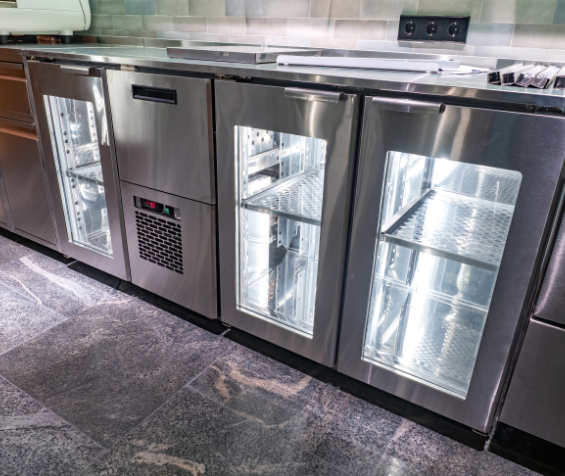
Key Benefits: Why Automation Matters in Commercial Appliance and Furniture Manufacturing

Commercial furniture and appliance manufacturers operate in environments where speed matters, but consistency matters just as much. A production line may involve repeated fastening, panel placement, bracket installation, part transfer, inspection, and finishing steps. When these processes depend heavily on manual handling, small variations can compound into rework, delays, or quality issues.

Automation helps address these challenges by creating more controlled, repeatable production conditions. The goal is not to remove people from the process. It is to assign repetitive, physically demanding, or variation-prone tasks to systems designed for consistency, while allowing skilled workers to focus on oversight, troubleshooting, and higher-value production activities.

Here are some of the most common challenges automation can help solve in commercial appliance and furniture manufacturing.
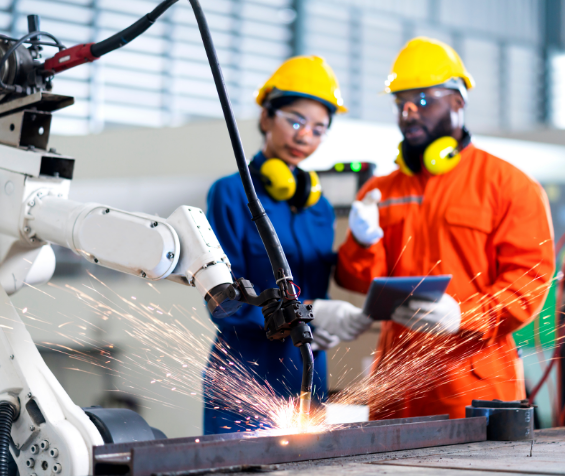
Repetitive Assembly Requirements Benefit From Advanced Automation

Commercial appliance and furniture production often involves recurring assembly tasks performed hundreds or thousands of times. Fastening hardware, placing panels, installing brackets, aligning subassemblies, and transferring components can all become sources of variation when performed manually over long shifts.

Appliance assembly automation and automated furniture assembly systems help stabilize these repetitive tasks. By controlling motion, fastening force, part placement, and sequencing, automated systems reduce variation and support more consistent output across production runs.

Throughput Pressure and Shorter Lead Times

Manufacturers in these industries are often expected to increase output without sacrificing quality or dramatically expanding labor. As order volumes rise or lead times compress, manual stations can become bottlenecks that slow the entire line.

Automation helps improve production flow by reducing idle time between steps and creating more predictable cycle times. When systems are designed around the actual product mix and production pace, manufacturers can increase capacity while maintaining control over quality.

Automated Processes Can Solve Ergonomic and Safety Challenges

Commercial appliances and furniture components can be large, awkward, or repetitive to handle. Appliance housings, seating frames, cabinet panels, and metal furniture structures may require frequent lifting, positioning, or rotation during assembly.

Material handling automation can reduce physical strain by moving parts into position consistently and safely. This improves ergonomics for operators while also supporting better alignment for downstream assembly, welding, or inspection steps.

Quality and Fit/Finish Expectations

Commercial products are expected to withstand frequent use in demanding environments. Poor alignment, inconsistent fastening, missed components, or surface defects can create problems that appear during final inspection, installation, or customer use.

Automation supports consistent fit and finish by standardizing critical assembly and inspection steps. Robotic quality control, error-proofing logic, and controlled part presentation can help identify issues earlier in the process, reducing rework and protecting final product quality.

Bottom line? Commercial furniture and appliance manufacturing combines repetitive work, quality expectations, and physical handling demands. Automation is valuable because it helps bring structure and repeatability to each of those areas.

Automation Solutions for Appliance and Furniture Manufacturing

Commercial appliance and furniture production rarely needs one isolated machine. Effective automation often requires a combination of assembly, material handling, inspection, controls, and, in some cases, welding or laser systems. The right solution depends on the product, facility layout, production volume, and level of flexibility required.

Melton designs systems around those realities. Instead of forcing a standardized cell into an existing workflow, we evaluate how parts move, where variation occurs, and which processes are best suited for automation.
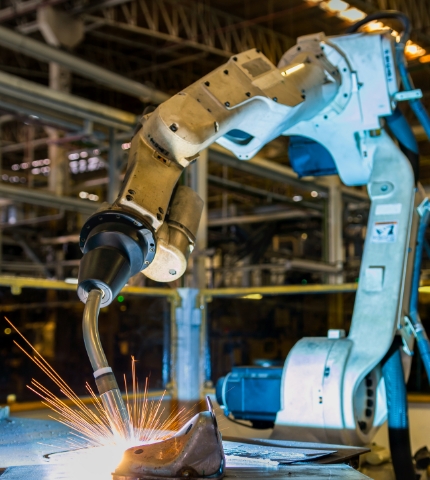
Embracing Automation: Top Solutions for the Furniture Production and Appliance Manufacturing Process

Here are some of the cutting-edge solutions for reducing operational costs in appliance manufacturing and furniture manufacturing today.

Robotic Assembly Systems

Robotic assembly systems are often central to commercial appliance and furniture automation. These systems can support fastening, component placement, bracket installation, hinge assembly, hardware insertion, and other repeatable assembly tasks.

For commercial appliances, robotic assembly can help with panels, housings, doors, subassemblies, and internal components. For furniture production, automated systems can support frame assembly, hardware placement, seating components, and modular product lines. Torque verification, force monitoring, and poka-yoke checks can also be incorporated to improve assembly consistency.

Material Handling Automation

Part movement has a major effect on production flow. If operators must repeatedly lift, rotate, or reposition large components, the line becomes more vulnerable to delays, ergonomic strain, and inconsistent part presentation.

Material handling automation can help move appliance bodies, panels, furniture frames, and large assemblies between stations. Robotic transfer systems, gantries, conveyors, and coordinated positioners can be used to improve flow while reducing manual handling. Consistent part presentation also improves the accuracy of downstream assembly, welding, and inspection.

Robotic Quality Control

Quality issues in commercial appliance and furniture manufacturing often become more expensive the later they are found. A missed fastener, misaligned panel, dimensional error, or incomplete assembly step can trigger rework at final inspection or after shipment.

Robotic quality control systems can help verify dimensional accuracy, component presence, assembly alignment, and surface or weld consistency. By integrating inspection earlier in the process, manufacturers can reduce subjective checks and create more reliable quality documentation.

Cobot Solutions

Cobot solutions are useful when flexibility is important. In high-mix production environments, collaborative robots can support tasks such as light assembly, small parts handling, machine tending, inspection support, and repetitive positioning.

For commercial furniture or appliance manufacturers with frequent changeovers, cobots can provide a practical way to add automation without redesigning the entire production line. They are especially useful when the application requires adaptability, operator interaction, or a smaller footprint.

Robotic Gluing Systems

Many furniture and appliance manufacturers rely on adhesive bonding for cabinet assembly, upholstery, insulation, laminates, panels, and structural subassemblies. Manual adhesive application can introduce inconsistencies in bead size, placement, and material usage, particularly on complex or high-volume production lines.

Robotic gluing systems improve repeatability through precision adhesive placement and variable glue flow rates that automatically adjust based on part geometry, travel speed, and application requirements. This allows manufacturers to apply the correct amount of adhesive exactly where it's needed, reducing waste while improving bond consistency.

For furniture production and structural subassemblies, robotic gluing provides greater adaptability for complex bonding applications involving irregular shapes, changing bead paths, or multiple adhesive patterns.

Robotic Welding Systems

Welding may not be the center of every commercial appliance or furniture manufacturing process, but it remains important for many metal components. Appliance support structures, brackets, reinforced housings, and metal furniture frames may require consistent weld quality across repeated production runs.

Robotic welding systems can help maintain repeatable weld parameters, bead geometry, and penetration for these components. When paired with proper fixturing and part presentation, robotic welding improves consistency while reducing variation between operators or shifts.

Robotic Laser Systems

Robotic laser systems may support cutting, engraving, marking, or serialization depending on the application. For appliance and furniture manufacturers, laser marking can be useful for traceability, part identification, branding, or production tracking.

Laser systems can also support precise processing of small components where clean edges, repeatable placement, or permanent markings are required. As with any automation system, the value depends on the material, process requirements, and integration into the broader workflow.

Contract / Build-to-Print

Some manufacturers already have defined machine concepts, drawings, bills of materials, or controls requirements. In those cases, Melton’s contract and build-to-print capabilities provide a path to bring those plans to life.

Our team can work from customer-supplied specifications to build and integrate equipment that fits an existing production strategy. This is especially valuable for OEMs and manufacturers with established engineering standards or internal automation plans.

The right automation system depends on product mix, production volume, facility layout, and the degree of flexibility required. Melton’s role is to help define and build the system that fits those constraints.

Why Choose Melton for Commercial Appliance and Furniture Automation?

Commercial appliance manufacturers and companies in the furniture industry rarely need generic automation. They need automated solutions built around existing workflows, plant layouts, part dimensions, production targets, and quality expectations. A system that performs well in one facility may not fit another without careful engineering, especially when assembly processes, material usage, and product variation differ across manufacturing operations.

At Melton, we have half a century of experience designing and integrating custom automation systems for manufacturers with complex production needs. With more than 1,000 successful applications installed, our experience spans automated machinery, material handling, robotic welding, inspection, controls, and system integration. We understand how automation technology, industrial robots, and specialized tools must work together to support reliable production operations.

Every project starts with the production environment. We evaluate how parts move through the assembly line, where operators experience strain, where human error is most likely to affect quality, and which processes create bottlenecks. From there, our engineering team designs a system around the manufacturer’s actual goals rather than forcing a prebuilt machine into the process.

Our in-house team manages system design, programming, integration, and startup. Whether you need a complete automated assembly system, a targeted material handling upgrade, or build-to-print support based on existing specifications, Melton focuses on reliability, usability, and long-term performance.

The Strategic Advantage of Automation in Commercial Furniture and Appliance Production

Automation is about creating a more stable production environment where repetitive work, quality checks, and part movement are handled consistently. For manufacturers responding to market demands, automation can help improve operational efficiency while supporting consistent output across changing product lines.

When automation is engineered correctly, manufacturers can reduce rework, improve throughput predictability, and make better use of skilled labor. Operators spend less time on repetitive lifting or fastening and more time managing production flow, resolving exceptions, and supporting quality. Automated systems can also collect valuable data from the production process, helping teams identify bottlenecks, respond to market trends, and make better decisions over time.

Industrial automation for furniture production can also make mixed product lines easier to manage. Flexible systems, cobots, and adaptable fixturing can help manufacturers respond to product variation without losing control over consistency. In appliance manufacturing, automation systems can automate production steps, improve assembly repeatability, and reduce the risk of defects appearing late in the process.

These benefits compound over time. More consistent assembly improves quality. Better material handling improves safety and flow. Integrated inspection reduces rework. When designed thoughtfully, automation enables manufacturers to scale more reliably while supporting improved efficiency, controlled material usage, and the flexibility to incorporate sustainable materials where product requirements allow.

Melton: Your Partner for Commercial Appliance and Furniture Manufacturing Automation

At Melton Machine & Control Company, we help manufacturers improve production flow, assembly consistency, and long-term system reliability. Our automation solutions are engineered around your parts, your facility, and your production requirements.

If you're exploring commercial appliance manufacturing automation, commercial furniture manufacturing automation, appliance assembly automation, or automated furniture assembly systems, our team can help evaluate the right path forward.

Every solution reflects our guiding principle: “A solution that works for you because it was made for you.”

Start a conversation today to explore an automation system designed around your manufacturing goals.
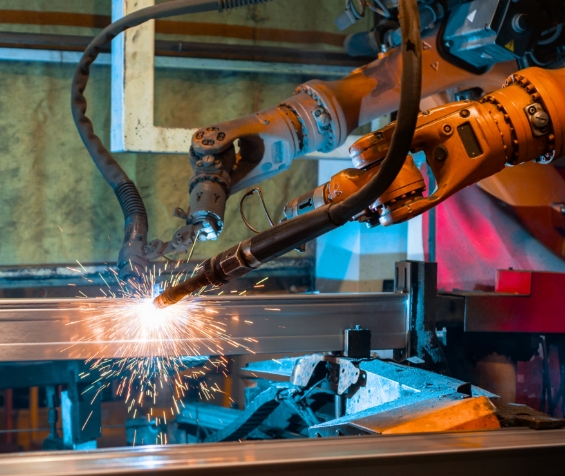
types of robotic welding systems

Get a Free Assessment

Successful automation starts with informed decisions. Speak with one of our experts today and see how our systems can transform your plant’s performance.

This field is for validation purposes and should be left unchanged.
By providing a telephone number, email address, and submitting this form you are consenting to be contacted by email and SMS text message. Message & data rates may apply. You can reply STOP to opt-out of further messaging. We will never share your personal information with third parties for marketing purposes. Privacy Policy

Partners and Affiliations